Massage Guns for Golfers: Reach, Power & Grip
By Kira Volkov • 19th Feb
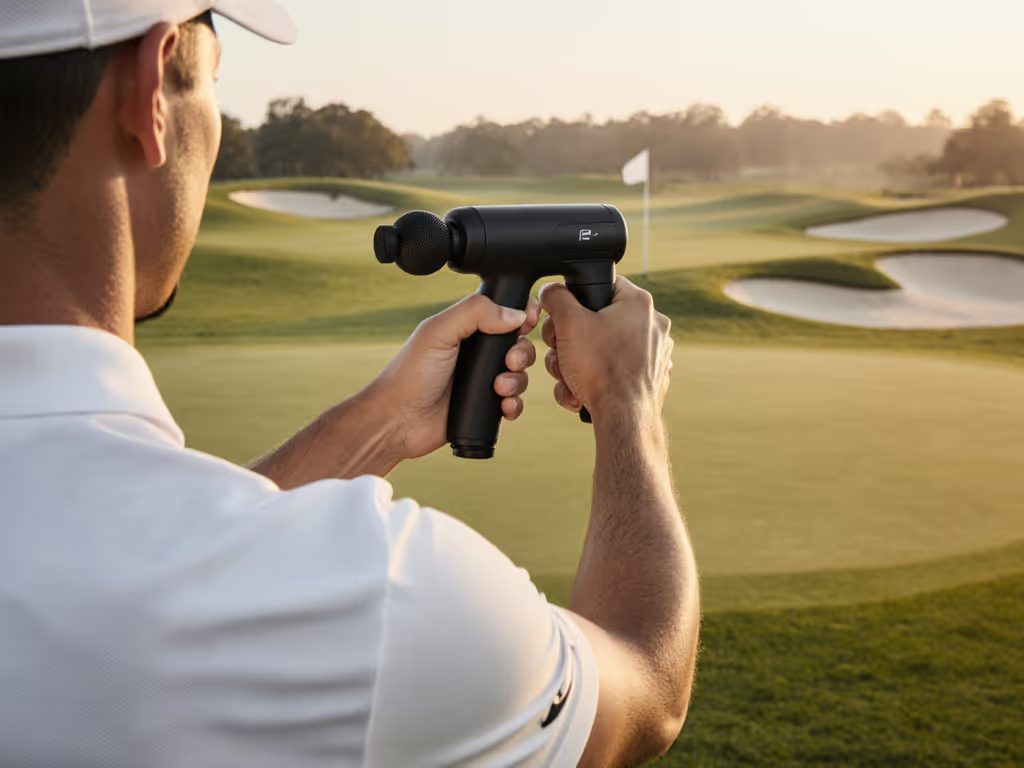
The Problem: Why Golfers Tighten Up Between Swings
You've already lost swings before you step on the tee. Tight glutes, restricted hip rotation, and locked shoulders (all from your desk chair) mean your massage gun for golfers has to do real work, not feel like a toy. The problem isn't finding a percussion device; it's finding one with the reach, stall force, and grip texture to actually unlock the muscles that stop you from rotating hard. Grip, reach, and torque decide whether power actually returns.
Golfers get tight because they repeat a single movement in a range of motion their bodies don't typically access, especially if they spend eight hours at a desk[1]. This repetitive stress loads the nervous system (it increases tone and tension as a protective mechanism), creating micro-damage in the muscles used during the swing[1]. The result is a vicious cycle: tighter muscles narrow your movement patterns, which further restricts your swing, which causes more pain[1].
Your lower body takes the worst hit. Tight calves, glutes, and hip flexors kill hip rotation before you even start. Your shoulders and traps lock up. Your wrists and forearms lose stability. Standard stretching or a hot shower doesn't cut it: you need active percussion therapy to flush the tissue, restore blood flow, and signal your nervous system that you're not in danger anymore[1]. See the science-backed percussive therapy benefits that validate these recovery effects.
The Agitation: Why Standard Recovery Fails Under Real Conditions
Here's where most golfers stumble: they buy a massage gun based on hype, brand name, or a pro golfer's Instagram post, then realize it doesn't fit their actual body, reach, or workout rhythm. Use our massage gun buying guide to focus on specs like stall force, amplitude, and ergonomics that actually matter.
Stall force matters. A lightweight device that loses power the moment you press into a knot defeats the purpose. I learned this between sets at a meet. I grabbed a lightweight massage gun to blast my traps, and it stalled the second I applied real pressure into the tension[1]. The head froze. The rhythm broke. Recovery doesn't happen if the tool fails under pressure[1].
Reach is non-negotiable. Most handles are too short for solo access to your mid-back and glutes. You end up contorting your shoulder or gripping awkwardly, which defeats the whole ergonomic advantage. Posterior chain reach test is this: can you comfortably hit your own glutes, hamstrings, and lower back without a partner, without straining your wrist, and without triggering your opposite shoulder?
Grip texture and handle angle matter more than marketing copy. A slippery or thin handle forces your forearm to work hard just to hold the device steady. After 5 minutes on your calves, your hand is numb and your wrist is fatigued. A textured, longer handle that sits naturally in your palm keeps your grip stable and your focus on the tissue, not on staying balanced.
Percussion therapy works: research confirms massage guns reduce stiffness, improve range of motion, and accelerate recovery[3]. But only if the tool itself doesn't fail or fatigue you in the process.
The Solution: What to Look For in Your Golf Recovery Tool
Stall Force and Frequency: Numbers That Predict Real-World Performance
Industry leaders like Theragun and Hypervolt deliver 2,000+ pumps per minute with multiple speed settings[1]. That cadence creates a steady pressure stream that flushes tissue without jarring your nervous system. But the real test is consistency: does the head maintain that rhythm when you press hard into a knot?
A device that maintains its amplitude (the actual depth of each percussive hit) under pressure is one that won't stall mid-recovery session. Look for models that emphasize stall force (the amount of resistance the head can push through before losing power). Golfers working deep into glutes or upper-back knots need this.
Reach and Handle Design: Ergonomics Decide Adherence
A handle shorter than 6 inches limits solo access to your posterior chain. A handle angled at 90 degrees to the head is harder to control on large muscle groups than one with a slight forward tilt. Textured grip surfaces (rubber, ribbed, or leather-like finishes) prevent the slip that forces your forearm muscles to overcompensate[1].
The weight distribution matters. A heavy head on a light handle causes rotational stress in your wrist. A balanced device feels like an extension of your arm, not a tool you're wrestling with.
Percussion Cadence: Smooth vs. Jarring
Not all 2,000-pump-per-minute devices feel the same. Some deliver a smooth, rolling rhythm that relaxes tissue. Others feel prickly, sharp, or jarring. Test the lowest speed setting on your forearm first. If it feels aggressive at low speed, the higher settings will overload your nervous system rather than calm it[1]. Golfers need recovery that feels therapeutic, not punishing.
Attachment Heads: Fewer Is Better
Golf-specific recovery needs three head types: a ball (for small muscle groups and trigger points), a flat paddle (for large muscle groups like glutes and quads), and a fork (for calves and Achilles). Too many attachment options create decision friction. You'll waste time swapping heads and second-guessing which one to use. A device with 2-3 well-designed attachments beats one with six mediocre ones. For detailed picks by muscle group, check our massage gun heads comparison.
Comparison: How Reach, Stall Force, and Grip Stack Up
Theragun and Hypervolt lead the market for reasons rooted in data[1]. For a deeper brand-level breakdown, see our Hyperice vs Therabody comparison. Therabody's director of science reports that percussion therapy reduces pain by modulating the nervous system: the pressure blocks pain signals while vibration uses vibratory analgesia to code them differently[1]. This allows your body to pump more oxygen and nutrients into fatigued tissues, accelerating recovery[1].
Hypervolt was named the official recovery device for the PGA and Champions tours in 2020[1]. That partnership reflects real-world testing by pros who demand tools that don't fail under tournament pressure (the same threshold golfers hit when they need relief between rounds).
Both brands emphasize commercial-grade durability and rapidly pulsing piston-like arms that accommodate alternating head attachments to deliver pressure at right angles to target areas[1]. But your choice depends on your specific body size, grip strength, and solo access needs:
- Handle length: Measure the distance from your wrist to your glutes when you reach behind yourself without bending. Choose a handle that extends at least 2 inches past your natural reach.
- Grip circumference: Your hand should wrap around the handle with slight resistance. Too thin = slipping. Too thick = forced clenching.
- Weight: Under 3 pounds keeps wrist fatigue minimal during longer sessions. Over 4 pounds triggers grip exhaustion after 5 minutes on large muscle groups.
- Noise floor: If you can't use it before 6 AM without waking others, you won't use it daily. Aim for under 65 decibels.
Golfers warming up for three minutes with a massage gun accomplish what otherwise takes 25 minutes of stretching and warm-up drills[1]. That speed matters for tournament prep and busy schedules.
Real-World Protocols: Where Reach and Torque Pay Off
Once you have the right tool, use it:
- Pre-round activation (3 minutes): Hip flexors (1 min), glutes (1 min), shoulders and traps (1 min). Low-to-mid speed, light pressure. Goal: blood flow and neural reset, not deep tissue work.
- Post-round recovery (5 minutes): Calves (1 min), quads (1 min), glutes (1.5 min), upper back (1.5 min). Mid-to-high speed, as much pressure as feels therapeutic. Goal: flush lactate, reduce DOMS onset.
- Desk break decompression (2 minutes): Traps and shoulders (1 min), neck and upper back (1 min). Low speed, light pressure. Goal: interrupt postural tension before it locks in.
The posterior chain reach test is this: can you hit all four zones solo, comfortably, without wrist strain or repositioning? If not, the handle is too short or the weight distribution is wrong. For step-by-step technique and safety, follow our proper massage gun usage guide.
Summary and Final Verdict
A golf swing recovery tool lives or dies by three metrics: stall force that doesn't quit under pressure, reach that grants solo access to your posterior chain, and grip texture that stays steady without forcing your forearm to work as hard as the muscle you're treating.
Theragun and Hypervolt set the standard because they deliver on all three. But the right choice depends on your body, your schedule, and whether you'll actually use it. A device that's too heavy, too short, or too noisy becomes a drawer item within two weeks. Pick one based on real ergonomic fit, not celebrity endorsement.
Recovery isn't magic: it's mechanics. Your massage gun is only as effective as its ability to reach the tissue you're trying to unlock, maintain pressure without stalling, and stay comfortable enough to use five days a week. If it fails under the pressure you apply, it fails your program. Test the grip, measure the reach, and verify the stall force before you buy. The data will tell you what works.
Related Articles