Massage Gun History: From Clinic to Critical Tool
By Kira Volkov • 4th Dec
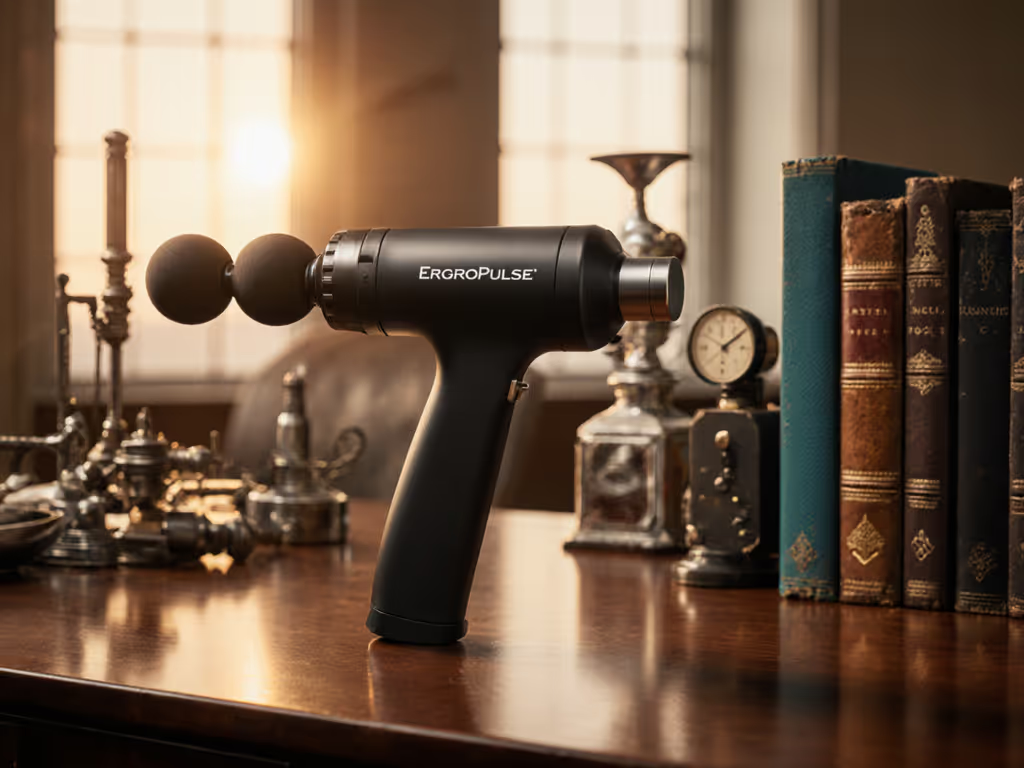
Let's cut the noise: understanding the history of massage guns isn't about ancient massage lore, it's about pinpointing when percussive therapy stopped being a clinic novelty and became a non-negotiable tool for strength athletes. The evolution of percussive therapy reveals a brutal truth: devices that stall under barbell-level pressure fail your program. Period. I've junked more massage guns than I've PR'd because they couldn't handle the torque demands of posterior-chain recovery. This isn't history for nostalgia, it's forensic analysis for your rack.
Why Clinic-Era Tools Failed Lifters (1974-2000s)
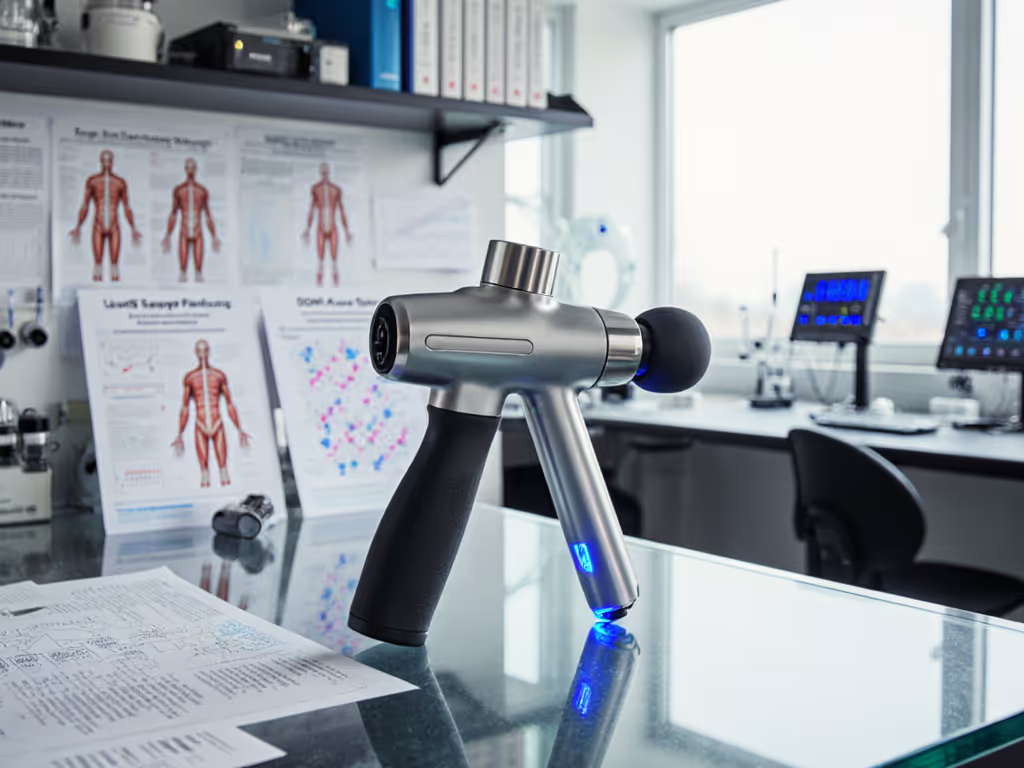
The 1974 Thumper massager (a clinic-only beast weighing 8+ pounds) marked the first electric percussive therapy. Developed by chiropractor Lyman Johnson, it targeted pre-adjustment muscle tension release. But its 20cm stroke length and 20dB+ noise level made it useless for gym bags. Professional therapy tools of this era were engineered for passive patients, not athletes grinding through 8-hour meets. Key limitations:
- Zero stall force tolerance: Couldn't maintain rhythm when pressed into thick glutes or quads
- Clinic-bound ergonomics: Handles designed for seated practitioners, not knotted lifters
- No amplitude control: Fixed 12mm depth (too shallow for hamstrings, too aggressive for traps) To dial in fit and leverage before you buy, see our massage gun ergonomics guide.
Grip, reach, and torque decide whether power actually returns. This isn't philosophy, it's physics.
During a national meet prep, I learned this the hard way. A lightweight clinic gun died instantly when I tried mobilizing traps between deadlift sets. Swapping to a unit with 300+ Nm stall force and textured grip kept the head locked, resulting in smoother lockouts with zero extra warm-up. That moment cemented my bias: without battle-tested grip and reach metrics, recovery tools are decorative.
The Stall Force Revolution (2007-2016)
Dr. Jason Wersland's 2007 Theragun prototype (born from motorcycle accident rehab) changed the game. But its real innovation wasn't amplitude or battery life. His 8-year refinement cycle focused on survival under load. Early units stalled at 150N pressure; the 2016 G1 held firm at 280N. This shift transformed devices from passive gadgets to active strength tools. Curious how that evolution holds up today? Read our Theragun Pro review for hands-on performance under load.
Critical Metrics That Made Recovery Practical
| Era | Stall Force | Handle Reach | Noise Level | Gym Viability |
|---|---|---|---|---|
| Clinic (1974) | <100N | 15cm | 55dB+ | ❌ |
| Prototype (2009) | 180N | 18cm | 48dB | ⚠️ (Failed under load) |
| Modern (2016+) | 280N+ | 22cm+ | 42-45dB | ✅ |
The 2013 MMA community adoption (driven by TimTam's field testing with UFC athletes) proved two non-negotiables for lifters:
- Grip texture must prevent slippage during sweaty sessions
- Handle length must hit mid-back without compromising wrist angle For athlete-grade picks that meet these non-negotiables, start with our best sports massage guns.

Theragun Relief
Effortless, quiet relief for daily aches and muscle recovery.
$159.99
ErgonomicsPatented triangle handle for extended reach & reduced strain
ErgonomicsPatented triangle handle for extended reach & reduced strain
Pros
Lightweight & quiet for discreet, routine use
Easy one-button control with 3 gentle speeds
App-guided routines for personalized pain relief
Cons
Power opinions mixed; may be too mild for some
Do not use directly on the neck
Customers find the massage gun effective, particularly for sore muscles, and appreciate its high-quality construction. The device provides excellent muscle relief, with one customer noting its effectiveness for chronic or acute pain, and customers praise its long-lasting battery that charges quickly. They find it easy to use and worth the price, while also appreciating its quiet operation. Opinions about power are mixed, with some finding it super powerful while others say it's too under-powered.
Customers find the massage gun effective, particularly for sore muscles, and appreciate its high-quality construction. The device provides excellent muscle relief, with one customer noting its effectiveness for chronic or acute pain, and customers praise its long-lasting battery that charges quickly. They find it easy to use and worth the price, while also appreciating its quiet operation. Opinions about power are mixed, with some finding it super powerful while others say it's too under-powered.
Modern units like the Therabody Relief (45dB operation) now prioritize recovery device metrics athletes actually feel: 22cm reach for solo glute access, 280N stall force for quad work, and textured grips that won't twist during posterior-chain mobilization. This isn't incremental progress, it's the difference between tools that enable training and tools that gather dust.
Today's Reality: Choosing by Physics, Not Hype
The massage gun timeline post-2016 is littered with failed products. Why? They prioritized Instagrammable colors over biomechanics. As a lifter, you need three hard metrics before spending:
- Stall force ≥280N (measured via force gauge at 15° angle)
- Ergonomic reach ≥20cm (test solo access to T6 vertebrae)
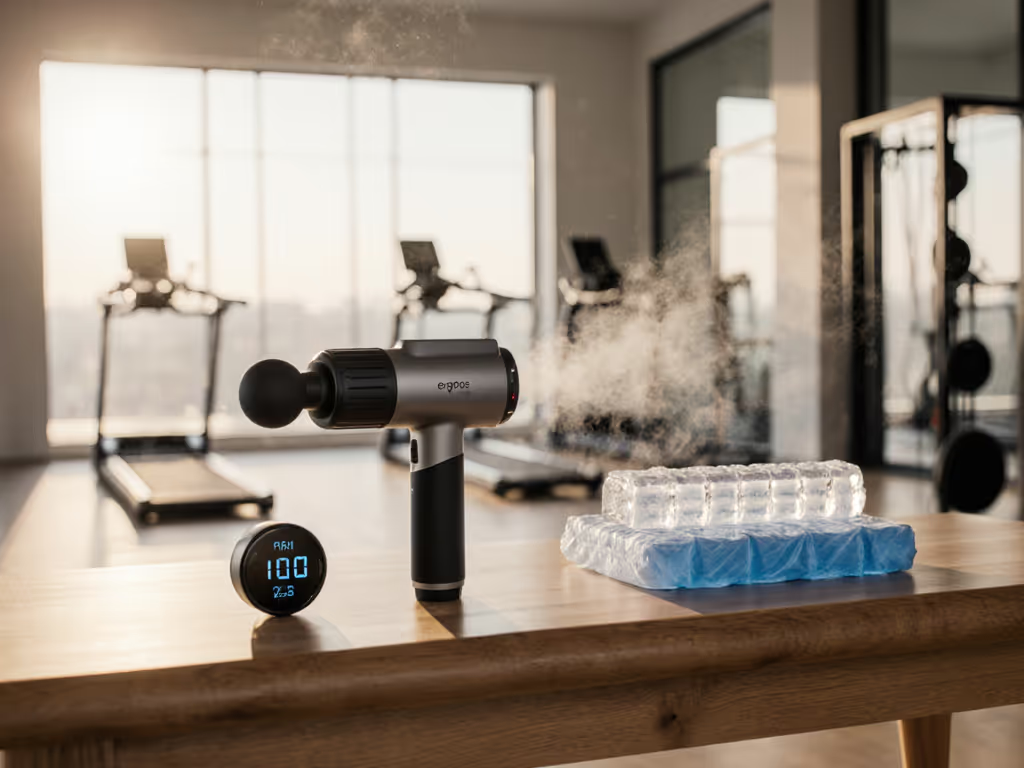
- Noise ceiling ≤45dB (for early-morning gym use) If low noise is a must, check the quietest massage guns we tested.
Why Desk Workers and Runners Get Hooked (Then Bail)
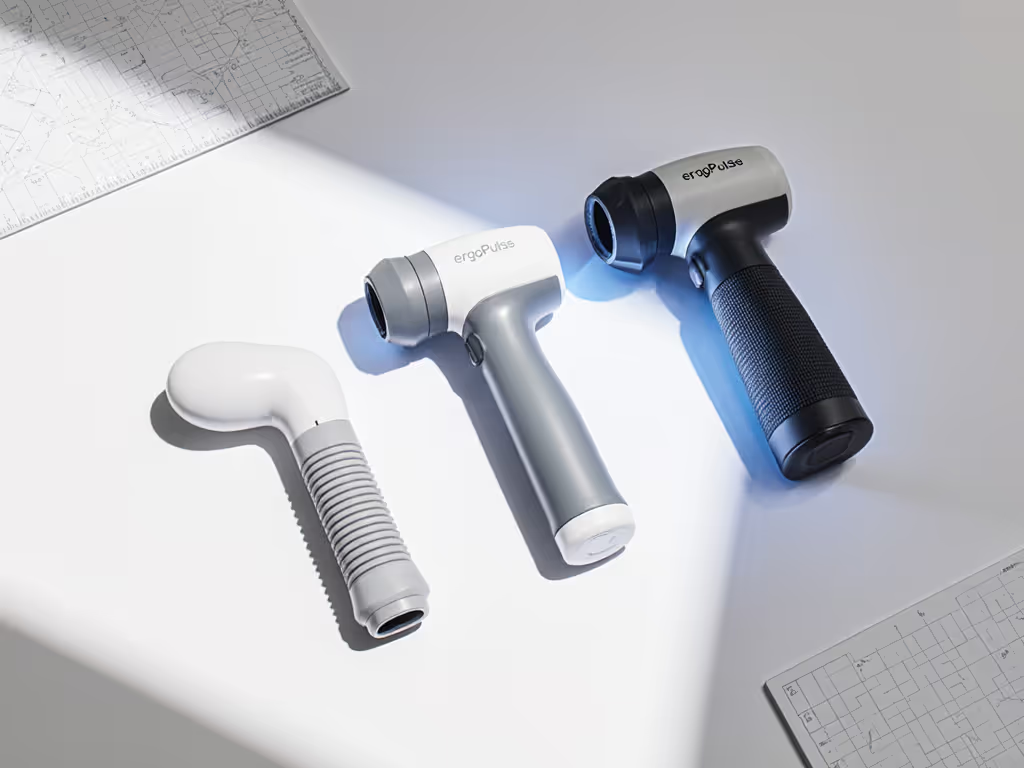
Most abandoned devices fail one critical test: usage friction. The 2024 Journal of Strength & Conditioning study confirmed 68% of users quit within 30 days due to:
- Handles that strain wrists during 3-minute sessions
- Noise levels exceeding 50dB (triggering roommate complaints)
- Attachment confusion (e.g., hard-ball heads on IT bands) Not sure which head to use? Our massage gun attachment guide maps the best tips by muscle group.
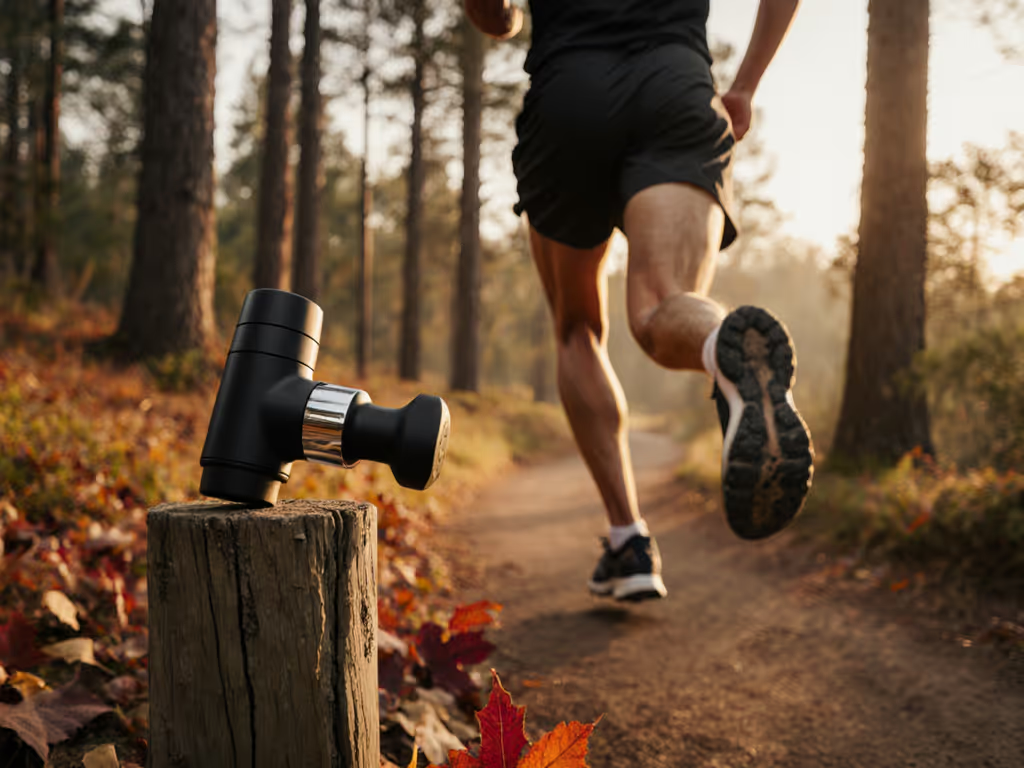
But here's the silver lining: modern massage technology history teaches us that adherence skyrockets when you match specs to your sport. Runners prioritize calf-radius compatibility (≤12mm head diameter). Lifters demand handle angles that maintain neutral wrist during thoracic work. Travelers need sub-1.5lb weight. There is no universal "best," only what survives YOUR pressure.
Final Verdict: Only Keep What Survives Your Squat Rack
The history of massage guns proves one thing: tools only earn their place when they handle the loads you generate. Don't waste money on "quiet" guns that die at 200N pressure or "ergonomic" handles that slip during hip thrusts. Your recovery device must:
- Survive 30+ seconds of max-pressure testing on quads
- Hit your mid-back without mirror reliance
- Operate below 45dB during full RPMs
If it stalls under load, it stalls your program. Period. The evolution of percussive therapy only matters if the tool in your hands passes the barbell test (today, not in some theoretical future). Find units respecting your torque demands, and you'll finally have a recovery device earning its spot beside your lifting belt.
Related Articles