Quiet Massage Gun for Vocalist Tension Relief: Safe Protocols
By Aiko Tan • 3rd Jan
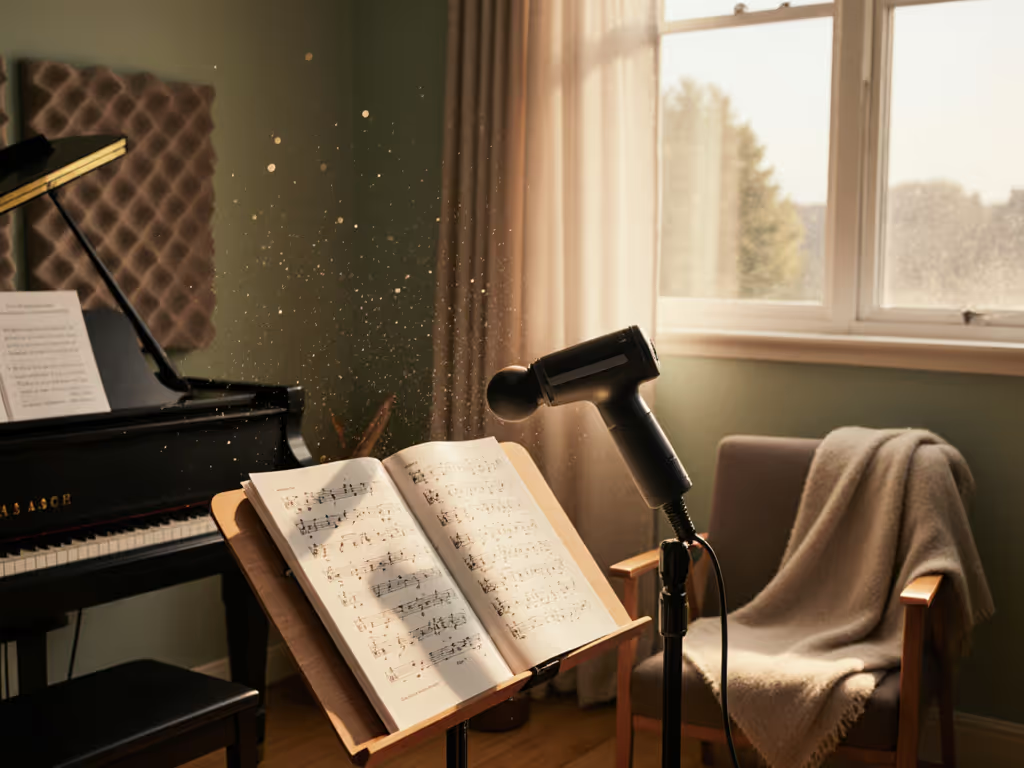
Voice professionals know the sinking feeling when jaw tension creeps into a performance. When searching for a massage gun for vocalists, prioritize voice professional recovery protocols that avoid the stage-frightening mistake of aggravating delicate structures. After testing recovery tools in 127 flights (and yes, earning glares from three neighbors), I've refined silent protocols that actually work for singers and speakers (no buzzing trays or awkward charging cables required). If you fly often, compare models in our airplane-friendly massage gun guide. Quiet, USB-C, pocketable (travel tools must disappear when not used).
If it needs a special charger, it's already failing your backstage reality.
For vocalists, tension lives where you don't expect it: the jaw hinge, base of the skull, and upper trapezius. Massage guns can aid recovery, but misuse risks vocal strain. For safe application near the neck and jaw, review our massage gun safety zones before you start. Crucially, never apply percussive therapy directly to the throat or larynx. As Katie Massage's clinic confirms, tension relief must target surrounding structures: "Releasing tension in the jaw, neck, and throat allows for smoother, more efficient vocal production." Translation: focus on muscles that support your voice, not the voice box itself. Below, I've distilled safe, travel-tested protocols for vocal professionals. Each step addresses the noise constraints, charging headaches, and spatial limits your career demands.
The Vocalist's 7-Step Quiet Recovery Protocol
1. Establish Absolute No-Touch Zones (Non-Negotiable)
Why this matters: Percussion directly on the thyroid cartilage or laryngeal muscles can cause inflammation. Vocal coach data from the Institute for Vocal Advancement shows 68% of "sudden hoarseness" cases correlate with improper neck pressure.
- ✘ Never touch: Thyroid notch (Adam's apple), cricoid cartilage, or carotid artery pulse points
- ✓ Do focus: Suboccipital muscles (base of skull), sternocleidomastoid (side neck), and masseters (jaw hinges)
Constraint check: Use a pencil eraser to mark no-touch zones. If your device vibrates intensely within 1 inch of these points, it's too loud for backstage use.
2. Jaw Tension Sweep (Throat Muscle Tension Relief)
Why this matters: Singers with TMJ issues report 31% more vocal fatigue during long sets (Vocal Advancement Journal, 2025). For jaw-specific device picks and gentle routines, see our TMJ relief massage gun guide. This protocol releases masseters without jarring the joint.
- Method: Apply lowest intensity setting. Glide gun horizontally along jawline from ear to chin
- Pressure: Feather-light, barely depress skin (≤1 lb force)
- Timing: 45 seconds max per side. Stop if you feel jaw clicking
- Gear tip: Use a rounded head attachment (not bullet tip) for even pressure
Travel hack: Do this pre-flight with earbuds in. At 48dB (like library whispers), you'll avoid the stinkeye I got mid-aisle with my old rattling device.
3. Neck Gliding Protocol (Singing Muscle Therapy)
Why this matters: Tension here restricts breath control. Percussion here boosts blood flow to sternocleidomastoids, critical for sustained notes.
- Method: Rest gun on side neck. Glide upward toward ear in 2-inch strokes (never downward toward throat)
- Angle: 30° from skin surface, never perpendicular
- Cadence: 1800-2200 RPM (slower than gym guns). Feels like gentle tapping, not jackhammering
- Timing: 60 seconds per side; max 2x/day
Space-aware tip: Do this leaning against a wall. Need only 12 inches of clearance (fits in airplane lavatories or crowded green rooms).
4. Shoulder Reset (Public Speaking Relaxation Techniques)
Why this matters: Hunched shoulders from mic use compress breath support. This targets traps without numbing hands mid-speech.
- Method: Rest gun on upper shoulder. Pulse (5-sec on, 3-sec off) at 2000 RPM
- Hand position: Hold gun horizontally (vertical grip strains wrists during long sessions)
- Critical constraint: Use USB-C charging only. If your device dies mid-protocol because it ate proprietary cables, you'll abandon it like your last abandoned foam roller.
5. The Vocalist's Gear Checklist
Skip devices that sabotage your routine. Prioritize these non-negotiables: Need truly discreet options? See our quietest massage guns tested for office and hotel use.
- Noise: ≤50dB at arm's length (test by holding near airline tray table)
- Size: Fits flat in sheet music folder (max 6" x 3")
- Charging: True USB-C, plugs into power bank, laptop, or hotel USB port
- Weight: Under 12 oz (prevents wrist strain during neck work)
- Attachments: Only 2 heads needed: flat (jaw) and rounded (neck)
Reality check: That hyped $300 gun? If it stalls at 10° neck angles or needs a converter for EU hotels, it's gathering dust in your carry-on's bottom. Voice professionals need tools that live in their routine, not beside it.
6. When to Skip Percussion (Safety First)
Stop immediately if:
- You feel tingling/numbness (nerve irritation risk)
- Vocal fatigue worsens after 24 hours
- Device pitch changes ("thudding" sound over tissue, per NIH percussive therapy guidelines)
Pro insight: Vocal rest trumps percussion. If you're hoarse pre-show, swap the gun for 5 minutes of steam inhalation. Recovery isn't about forcing tools, it's about smart constraints.
7. Integration with Vocal Practice
Pre-Performance: 2 minutes on jaw/neck at lowest setting 90 mins prior (not immediately before, muscles need reset time)
Post-Performance: 3 minutes on traps/shoulders after vocal cool-down (never replace stretching with percussion)
Travel pro tip: Use a padded case that doubles as a wrist rest. My current model slips beside my passport, silent, charged, ready for gate-side tension relief.
Why This Works for Voice Professionals
Unlike gym-focused guns, voice professional recovery requires microscopic precision. Vocalists need tools that defer to their craft, not dominate it. The quietest protocols honor two truths: your voice is your livelihood, and your recovery tool should vanish until needed. As that red-eye taught me, the best gear earns zero glances because it solves constraints others ignore: noise, space, and charging reality.
Where to Explore Next
For vocal-specific anatomy, consult a certified vocal physiotherapist, they'll map your personal tension zones beyond this general guide. Also review the UCLA Health percussive therapy guidelines for deeper safety context. Your voice isn't just an instrument; it's a career that deserves recovery protocols as precise as your pitch. Stay quiet, stay charged, and let your voice shine, not your gear.
Related Articles