Prenatal Yoga Massage Guns: Safe Recovery by Trimester
By Naya Okonkwo • 3rd Mar
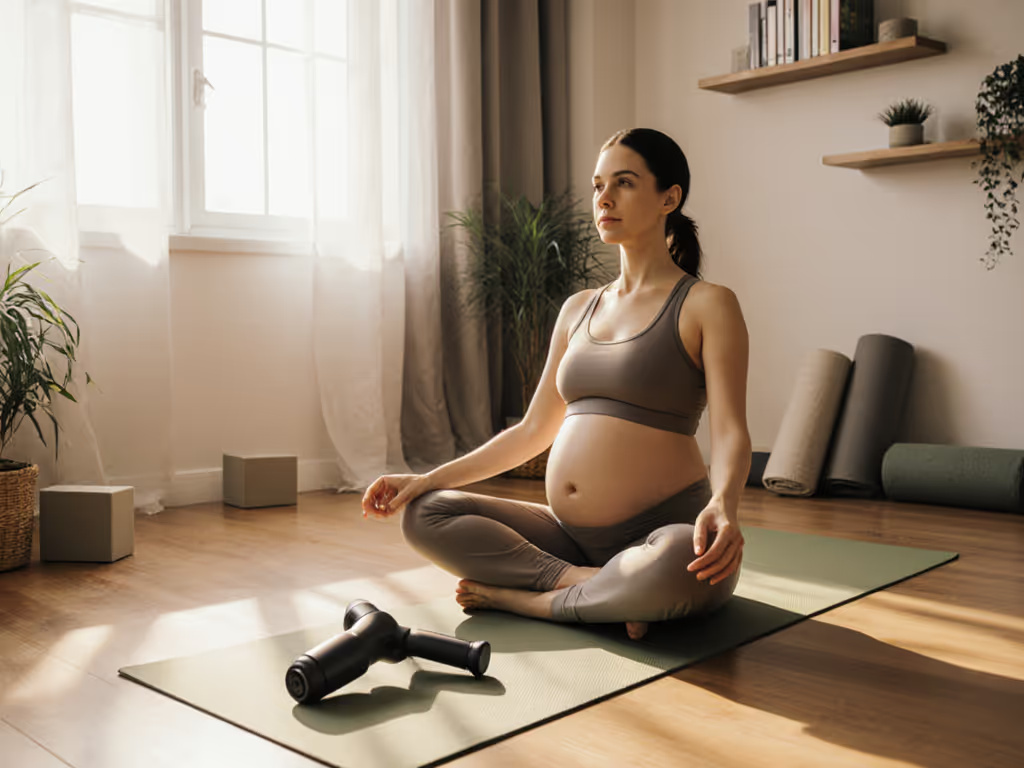
Prenatal yoga massage guns and pregnancy yoga recovery tools sit at an awkward intersection. You want relief from the physical strain of pregnancy (tight hips, aching shoulders, fatigue from shifting posture). But the device that works for a deskworker or athlete may not suit a pregnant body. The vibration, weight, and reach that feel fine on a non-pregnant person can introduce unnecessary risk during pregnancy. The challenge isn't whether these tools can work. It's whether they fit your pregnancy stage, body response, and safety boundaries.
I started testing massage guns after my own stint with tingling fingers from laptop marathons. The first "top pick" felt like a brick ten minutes in. That taught me something I've applied to every product since: if a device feels awkward in minute one, it won't become a habit. For pregnancy, the stakes are higher. The wrong fit, or wrong choice, isn't just abandoned. It's a safety question.
Let's cut through the confusion with data and clarity. Here's what you need to know to use these tools safely across your pregnancy. For a comprehensive overview of trimester-specific precautions, see our pregnancy-safe massage gun guide.
FAQ: Prenatal Yoga Massage Guns by Trimester
First Trimester: Should You Use a Massage Gun at All?
The short answer: No, not typically. Wait for clearance from your healthcare provider.[1][2]
The first trimester is when miscarriage risk is highest. While there is no definitive evidence that massage guns directly harm a developing fetus, the concern isn't proof of harm. It's the absence of reassurance.[1][3] Pregnancy hormones and circulatory changes are still establishing themselves. Your body's nervous system is heightened. Percussive devices introduce a variable that is hard to control: intensity of pulsation, precise location of pressure, and individual tissue sensitivity.
If you used massage guns before pregnancy and want to continue, talk with your obstetrician first.[1][4] Some pregnancies are low-risk; others have complicating factors. Each is different. Your healthcare provider knows your history.
What to do instead:
- Gentle manual stretching aligned with your yoga practice
- Prenatal massage by a trained therapist (hands-on, controlled pressure, trained awareness)
- Foam rolling on low-density, forgiving surfaces (very light pressure, short 30-second holds) If you're deciding between tools, our massage gun vs foam roller guide explains when each works best during pregnancy.
Second Trimester: When Massage Guns Become an Option
The second trimester is where cautious, approved use typically begins.[1][4]
Several factors shift. Morning sickness often lifts. Miscarriage risk drops sharply. Your body is adapting to pregnancy weight, and muscle fatigue, especially in the shoulders, upper back, and legs, becomes more obvious. If your healthcare provider has given the green light, a prenatal flexibility protocol focused on safe zones can ease real discomfort.
The rules that matter:
1. Target only safe zones.[1][4] Upper back, shoulders, neck (gently), and calves are suitable targets. Legs (specifically thighs and outer thighs) are safe if you don't have a history of blood clots.[1][4] Avoid: abdomen, lower back, pelvic region, and any area where pressure could disrupt blood flow or trigger contractions.[1] For a clear refresher on no-go zones and safe technique, review our massage gun safety guide.
2. Use the lowest setting.[1][3][4] Pregnancy hormones soften ligaments and shift your center of gravity. A setting that felt light before pregnancy may feel too intense now. Lowest setting means 1-2 minutes per muscle group, not aggressive tissue work.[1]
3. Feel the rhythm, not the force. Percussive tools vary in cadence. Some feel jarring or "prickly." Others feel smoother. Your body will tell you. If it feels harsh or causes tingling, stop. Fit beats force when real routines meet limited hands and time.
4. Watch for signs to stop. If you feel cramping, pressure in the lower abdomen, or dizziness, discontinue use immediately.[2] Listen to your body's cues.
Sample second-trimester protocol (if approved):
- Upper back: 1-2 minutes, lowest setting, gentle passes
- Shoulders: 1-2 minutes, lowest setting
- Calves: 30 seconds per calf, moving slowly
- Total time: ~5 minutes, 2-3 times per week
Third Trimester: Lighter Touch, Strategic Relief
Third trimester is physically intense. Relief matters. Caution still applies.[1][4]
Your weight is concentrated forward. Your lower back and pelvis are under load. Sleep becomes harder. Swelling increases. Some pregnant people find gentle massage gun use on upper body and legs deeply helpful for tension and circulation. But use gets more sensitive. Positioning becomes awkward (you can't easily lie on your back or belly). And pregnancy complications, including gestational hypertension, preeclampsia, and placental issues, are more likely to emerge.[1]
New cautions for the third trimester:
High-risk conditions require avoidance. If you've developed gestational hypertension, preeclampsia, or are at risk for preterm labor, massage gun use should pause.[1][2] Pressure and vibration can interact with these conditions in ways your healthcare provider needs to assess.
Positioning matters more. You may not tolerate lying on one side for solo mid-back work. Sitting upright to access shoulders and upper back is more practical. Plan sessions around posture.
Duration stays short. 1-2 minutes per zone, same as the second trimester. Prolonged vibration on one area increases risk of soreness or irritation in already sensitive tissues.[1]
Pelvic floor tension is real, but massage guns aren't the tool. You may feel pelvic floor tightness (a common pregnancy complaint). But direct percussion to the pelvic region is unsafe.[1] Pelvic floor tension relief in the third trimester comes from pelvic floor physical therapy, prenatal yoga, and breathing work, not massage guns. A trained pelvic floor therapist is the right specialist here.
Sample third-trimester protocol:
- Shoulders and upper back (seated): 1-2 minutes, lowest setting
- Calves (seated or supported standing): 1 minute total, lowest setting
- Total time: ~3-5 minutes, 2-3 times per week or as tolerated
What About "Pregnancy-Specific" Massage Guns?
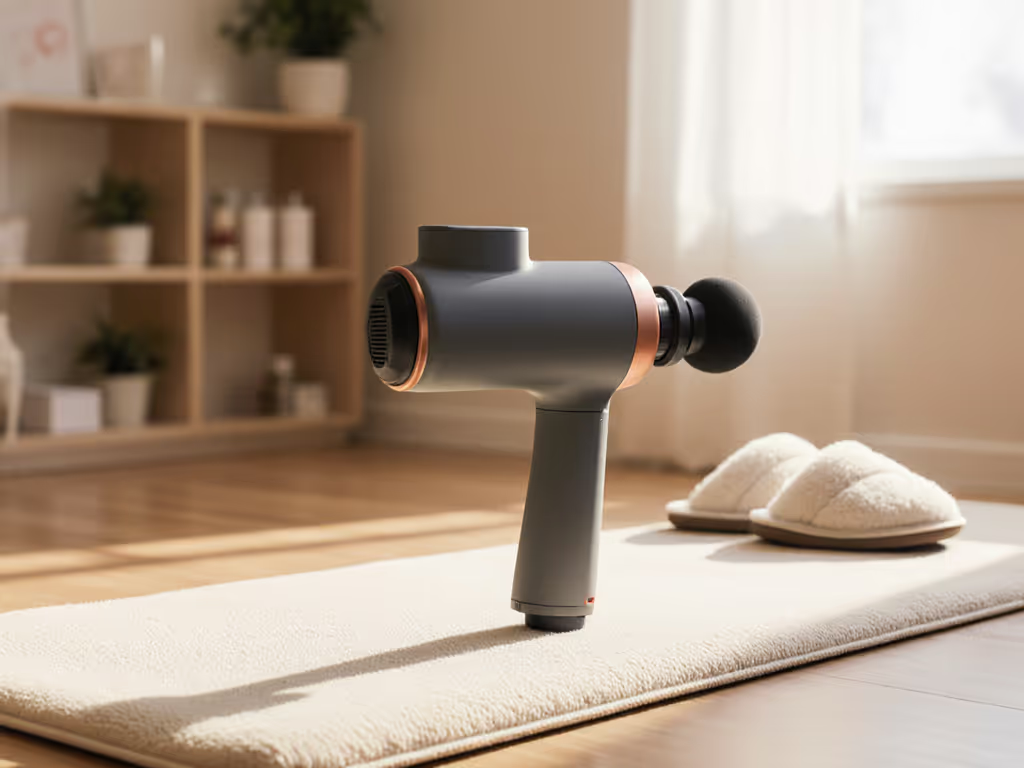
Some brands market mini or lightweight massage guns as "pregnancy-safe." Here's the honest assessment: lighter weight is mechanically easier on your grip and shoulder during pregnancy. Less strain means better adherence to your routine.[6] But lighter weight doesn't make the percussion inherently safer.[1][3] The vibration frequency and intensity still matter. A lighter device is only an advantage if all other safety rules are followed: low setting, safe zones, short sessions, and healthcare provider approval.
Weight does matter for another reason: fit. A full-size massage gun with a heavy motor head can be awkward in your hand when grip strength is compromised by pregnancy fatigue or hormonal laxity (joint looseness). A lighter, more balanced handle reduces strain and makes it easier to maintain control and precision.[6] If you're considering a massage gun, choose based on ergonomic fit to your hands, not just the pregnancy label.
Yoga Adaptations + Massage Gun Timing
Prenatal yoga and massage gun use work best when sequenced correctly.
Yoga comes first. It builds flexibility and body awareness. Then, if approved, a brief massage gun session can ease the muscle fatigue yoga creates, especially in larger muscles (quads, glutes, upper back). The combination is synergistic: yoga lengthens; massage gun flushes and reduces soreness. But the timing matters. For broader recovery planning with stretching, breath work, and cold therapy, follow our recovery sequencing guide.
- Pre-yoga: No massage gun. Your muscles need to work through the full range of motion your yoga asks of them.
- Post-yoga: 3-5 minute massage gun session, lowest setting, safe zones only. This reduces post-yoga soreness and supports recovery.
- Separate from yoga: On non-yoga days, a brief massage gun protocol can ease the specific muscle soreness pregnancy creates (shoulders, upper back, calves).
Trimester-specific recovery that stacks yoga and massage gun use looks like:
- Second trimester: 2-3 prenatal yoga sessions per week (20-30 minutes), 1-2 brief massage gun sessions (3-5 minutes) on non-yoga days.
- Third trimester: 2-3 modified prenatal yoga sessions (15-25 minutes), 1-2 brief massage gun sessions (3-5 minutes) as fatigue and discomfort dictate.
What Does Your Healthcare Provider Actually Need to Know?
When you ask your obstetrician or midwife about massage gun use, be specific. Don't just ask, "Is it safe?" Ask:
- "Can I use a massage gun on my upper back and shoulders at the lowest setting for 2-3 minutes at a time?"
- "Are there any conditions in my pregnancy history that would make this unsafe?"
- "If I feel any cramping or pressure, should I stop immediately?"
- "What areas should I absolutely avoid?"
Clear, specific questions get clear, specific guidance. Healthcare providers aren't anti-massage gun. They are pro-informed, cautious choice.[1]
Final Verdict: Should You Buy a Prenatal Yoga Massage Gun?
Here's the reality: prenatal yoga massage guns can ease real, pregnancy-specific muscle fatigue, but only if three conditions are met.
First, healthcare provider approval. No device, no matter how light or well-intentioned, should be used without professional guidance. Pregnancy is too variable.
Second, ergonomic fit to your hands. If the handle is heavy, awkwardly angled, or hard to grip, it will frustrate you in minute one and sit unused. Fit beats force. A lighter, balanced device with a handle that suits your hand size and strength is non-negotiable. You'll use it. A heavier, powerful device marketed as "best" won't fit your routine if it strains your wrist or shoulder.
Third, commitment to the safety boundaries. Lowest settings. Safe zones only. 1-2 minutes per area. No shortcuts. The temptation to "just increase it a notch" or "hit the lower back quickly" will be there. Pregnancies complicate easily. The boundaries exist for a reason.
If you can commit to all three, a prenatal massage gun can reduce shoulder and calf soreness, support post-yoga recovery, and ease the physical fatigue of pregnancy. But if approval feels uncertain, or if you can't access one that fits your hand comfortably, prenatal massage with a trained therapist and intentional yoga practice are proven, lower-risk alternatives.[1]
Your job isn't to have the most advanced recovery tool. Your job is to move gently, stay aware, and finish each day less sore than you started it. The right tool, whether it's a massage gun, a yoga mat, or a therapist's hands, is the one you'll actually use, safely, week after week.
Related Articles