Tendon Recovery Protocols: Massage Therapy Methods
By Priya Menon • 12th Apr
Tendon health massage therapy remains one of the most misunderstood interventions in recovery. Popular culture presents it as a universal fix (apply pressure, reduce pain, get stronger). The reality, rooted in tendinopathy recovery protocols and tissue science, is far more specific. Timing, force, tissue stage, and method all matter. Below, I'll walk through what the evidence actually shows, where massage fits, and where it doesn't.
FAQ: When Should Massage Therapy Start After a Tendon Injury or Repair?
This depends entirely on the healing phase. Tendons move through three overlapping stages: inflammation (1-7 days post-injury), repair (1-6 weeks), and remodeling (6+ weeks).[3] The mistake most people make is treating these as interchangeable.
In the inflammatory phase, aggressive massage is counterproductive. Your body is managing swelling and laying the foundation for healing collagen. Blunt force interrupts that process. Instead, the protocol emphasizes protection and gentle range of motion within pain tolerance.[1] Before reintroducing any tools, review our massage gun safety guidelines for contraindicated areas and pressure limits.
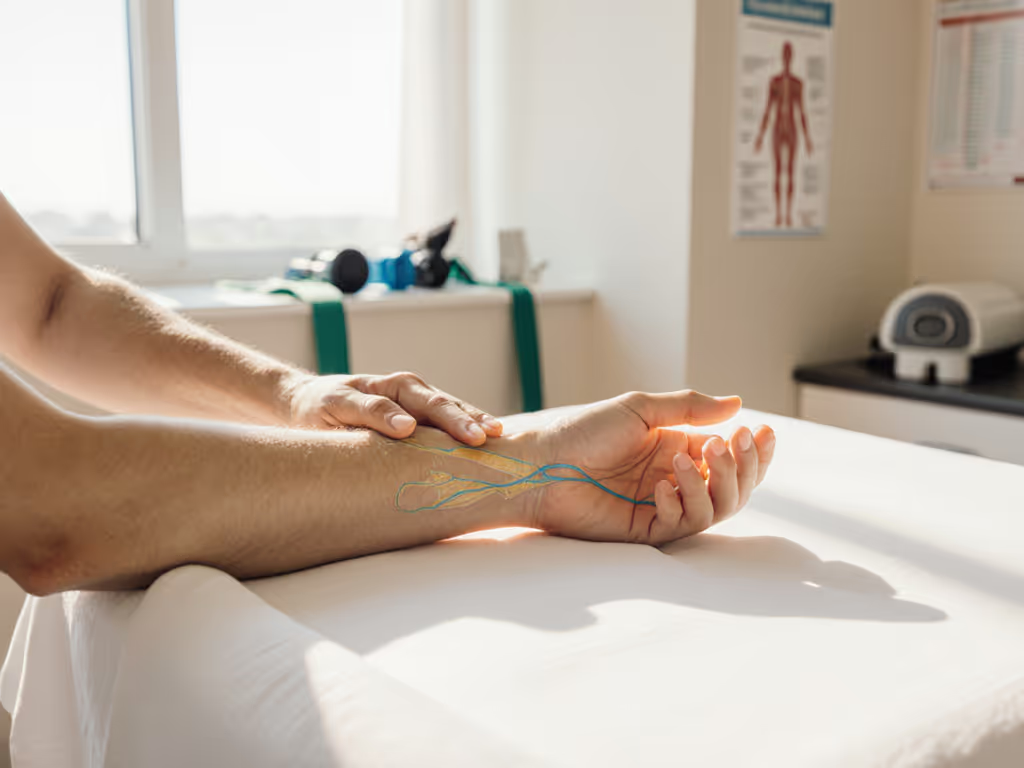
In the repair phase (roughly weeks 2-6), gentle scar massage can begin after the incision is healed, but only then.[1] For flexor tendons (among the most studied), scar massage starts around 10-14 days post-op, once sutures are removed.[2] The logic: you're mobilizing early scar tissue to prevent adhesions (where the repaired tendon sticks to surrounding tissue, blocking gliding). This isn't aggressive; it's deliberate, light pressure applied by a trained hand therapist.
In the remodeling phase (6+ weeks onward), progressive loading dominates the protocol, and soft-tissue work becomes supplementary, not primary.
The critical boundary: Instrument-assisted soft-tissue mobilization (IASTM) or aggressive manual techniques directly on the tendon itself should not begin until at least 16 weeks post-op.[1] I know clinics and enthusiasts who skip this checkpoint. Early aggressive work on a repairing tendon can rupture it. Tested the same way, every time, so I track this timing across protocols, it's consistent.
FAQ: Does Massage Prevent Adhesions, or Is Early Active Motion Enough?
Both, but in sequence. The evidence separates two competing priorities: avoiding scarring and protecting the repair.[4]
Prolonged immobilization does promote repair strength initially, but it increases adhesion formation risk, the tendon gets stuck to nearby tissue, limiting motion and function.[4] Modern rehabilitation uses what researchers call "pyramidal protocols": early controlled passive motion, then active motion, plus progressive loading to limit adhesion formation while protecting the repair site.
Massage is one tool within this framework, not the primary lever. The studies I've examined, particularly on flexor tendon repair, show that early active motion protocols (starting within the first week, under therapist supervision) restore tendon gliding most effectively.[5] Scar massage enhances this by breaking up restrictive adhesions as they form, but only after sutures are removed and under professional guidance.
The plain range: Expect 30-60 second holds or light cross-friction massage sessions, 1-2 times per day during early phases. More is not better; it's overstimulation.
FAQ: What Role Does Massage Play in the Later Remodeling Phase?
Here's where skepticism is warranted. Once the repair is robust (8+ weeks), the evidence shifts heavily toward progressive loading (specifically heavy slow resistance training), not passive manipulation.[8]
Heavy slow resistance (HSR) is the benchmark intervention. Why? It applies high physical load with minimal shock, triggering the tendon's adaptive response.[8] The tendon strengthens because it works, not because it's massaged. A quad set, a squat, a single-leg deadlift, these activate intrinsic healing and remodeling far more than any manual technique.
Massage during this phase can serve a supportive role: loosening trigger points in the surrounding musculature, reducing muscle tension that might compensate for the healing tendon, or aiding post-session flushing. But it's not the driver of tendon adaptation.
The framework I track: Once you begin strengthening (typically 6-8 weeks post-op for most tendon repairs), massage becomes a context, not a treatment.[6] Use it as a warm-up prep before your actual loading work, or as a recovery adjunct, not as a substitute for the loading itself. For step-by-step timing on pairing percussion with stretching and strength work, see our recovery sequencing guide.
FAQ: How Much Pressure Is Safe, and How Do You Know When It's Too Much?
This is where replicable measurement becomes essential. Isometric exercises (which create stable tension without motion) offer a useful analog. Research recommends ~70% of maximum voluntary contraction (MVC) as a starting point.[7] For manual massage, the equivalent concept applies: enough pressure to mobilize tissue, not enough to cause sharp pain or swelling the next day.
The practical test I use: If soreness, swelling, or bruising appears within 24 hours of massage, the pressure exceeded the tissue's current tolerance. If the area feels more mobile and less stiff, you're in range. Pain during the massage (in the 3-5 out of 10 range) is not a sign of effectiveness, relief afterward is. Technique matters—use these massage gun methods to target muscles without bruising to stay within tolerance.
For Achilles tendon recovery, a common mistake is aggressive calf massage while the tendon is still in early repair phases. Wait until week 6+ before applying substantial pressure. For rotator cuff tendinitis treatment, many people target the cuff directly; instead, releasing upper-back and neck tension (which feeds compensatory tightness into the shoulder) is often more effective early on.
The dose: 5-10 minutes per session, 2-3 times weekly once you're past the initial repair window. More does not translate to faster healing; it increases injury risk.
FAQ: What Is the Evidence for Massage Versus Other Recovery Tools?
Here's where I must be direct: massage has weaker evidence than progressive loading for tendon collagen production and adaptation.[8] Heavy slow resistance training is the gold standard. Massage helps manage pain and stiffness, potentially reducing movement restriction, but it doesn't build tendon strength on its own. If you want the evidence behind these effects, start with our research-backed massage gun benefits.
The tendon healing mechanisms documented across research point to three factors: (1) mechanical loading, (2) time and tissue remodeling, and (3) movement quality. Massage addresses the third by reducing restriction and pain, which allows better movement quality during rehabilitation. It's a facilitator, not the primary signal.
Where massage shows genuine value: Managing acute pain and swelling, reducing compensatory tightness in surrounding muscles, improving tissue mobility to enable earlier active range-of-motion work, and supporting long-term maintenance (stiffness prevention in chronic tendinopathy).
Practical Takeaway: Build Your Protocol Around the Phase
Don't ask, "Should I get a massage?" Ask instead: "Which phase am I in, and what does the evidence recommend for this phase?"
- Weeks 0-2 (inflammatory): Protection. No aggressive massage. Gentle scar work if incision is closed.
- Weeks 2-6 (repair): Light scar mobilization under therapist guidance (10-14 days post-op onward). Early active motion is primary.
- Weeks 6-12 (remodeling): Progressive loading is primary. Massage is supplementary, use it to manage muscle tension and restore mobility before or after your strengthening work.
- 12+ weeks (chronic or maintenance): Massage becomes a maintenance tool for stiffness prevention, but loading remains the driver of tendon adaptation.
I've watched this pattern hold across Achilles repairs, flexor tendon surgeries, and rotator cuff protocols. Tested the same way, every time, so the clarity emerges: method beats marketing. Follow the phase, prioritize the evidence-ranked interventions (loading first, massage second), and you'll spend your time (and money) on what actually works.
Continue Your Exploration
If you're managing a specific tendon injury, the next step is to confirm which healing phase you're in with your clinician and obtain a protocol tailored to that phase. Request a timeline with explicit milestones (e.g., "scar massage begins at week 2"; "strengthening starts at week 8"). Ask whether the protocol emphasizes early active motion or passive mobilization first, modern protocols favor early active work. Finally, build a repeatable weekly log to track soreness, swelling, and mobility. Measurement removes guesswork.
Related Articles