Massage Guns for Sleep: Science-Backed Protocols
By Priya Menon • 24th Apr
Introduction
The claims are everywhere: massage gun sleep quality has supposedly transformed nighttime recovery, muscle relaxation, and sleep onset. Brands boast about "clinical-grade" rigs and "20-minute deep tissue sessions before bed." But here's the skeptical reality: most marketing focuses on peak horsepower and RPM numbers, metrics that sound impressive and sell products, not necessarily what determines whether you'll actually use one at 10 p.m. on a Tuesday, or whether it'll disrupt your partner when you do.
Real percussive therapy for better sleep depends on three unglamorous factors: noise level, cadence feel, and protocol consistency. Tested the same way, every time, so you know whether a device works in your bedroom, not just in a lab.
This guide cuts through the hype and addresses the real questions people ask when considering a massage gun for sleep recovery.
FAQ
Is There Actually Science Behind Massage Guns and Sleep?
The Honest Answer: Indirect, not direct. Massage guns don't induce sleep, they reduce muscle tension and lower localized stress markers, which can improve conditions that interfere with sleep onset. The mechanism isn't mystical: percussive therapy triggers the parasympathetic nervous system in tight muscle groups, particularly the neck, shoulders, and upper back, where many of us hold chronic tension from desk work. For evidence-based outcomes beyond sleep, see our percussive therapy research roundup.
What research and clinical observation confirm[2]:
- Ultra-quiet massage instruments operating under 50 dB, paired with gentle, pre-sleep massage routines, can release muscle tension without the cortisol spike that loud, jarring stimuli cause
- Melatonin production improves when tension in the trapezius and shoulders drops
- Sleep onset becomes faster when tightness in the neck and upper back (common culprits for poor sleep quality) is addressed in the 5-10 minutes before bed
What the evidence doesn't claim:
- Massage guns don't replace CBT, sleep hygiene, or medical treatment for insomnia
- They don't create "deep sleep" or increase REM directly
- No device will help if you use it for 30 minutes at maximum power and trigger an adrenaline response
The reality: Cortisol reduction massage works only if the device and protocol feel restorative, not aggressive. A loud, high-percussion machine defeats the purpose. We've documented this the hard way (testing the same way, every time), so noise levels matter more than marketing promises.
What Specs Actually Matter for Sleep?
Stop Chasing RPM. Peak percussion-per-minute (PPM) is marketing theater.[1] A massage gun running at 3,200 PPM sounds powerful; in practice, what determines therapeutic feel is amplitude (how far the head travels), stall force (how much force the motor maintains under resistance), plus noise (whether you'll actually use it).
Here's what each measurement means:
| Spec | What It Means | Sleep Relevance |
|---|---|---|
| Amplitude (inches) | Distance the massage head travels per stroke | 0.47-0.63 in is therapeutic; smaller = superficial, larger = jarring[1][3] |
| Stall Force (lbs) | Motor strength when meeting resistance (tight muscle) | 17-37 lbs sufficient for tissue depth; higher isn't always better if noise climbs[3] |
| Noise (dB) | Sound output at max speed | Sub-50 dB is bedroom-safe; 55+ dB will wake a light sleeper or partner[2] |
| Weight (lbs) | Handheld device mass | Sub-2 lbs preferred for 5-10 minute sessions without grip fatigue[3] |
Our standardized testing mirrors what happens in actual bedrooms: late night, low light conditions, sustained contact on tender zones. If noise is your make-or-break factor, compare decibel readings in our quietest massage guns test. A device marketed as "whisper-quiet" can fail that test; an affordable alternative, tested the same way, often passes. Trust measured data over marketing adjectives.
What's a Realistic Pre-Sleep Protocol?
The Rule: 5-10 minutes, gentle to moderate amplitude, mid-range speed setting, targeted to tension zones. Duration matters less than consistency.
Upper Back & Neck Protocol (Desk Workers):
- Trapezius (upper back, both sides): 90 seconds per side, light pressure
- Levator scapulae (inner shoulder blade): 60 seconds per side, medium pressure
- Posterior neck (base of skull): 60 seconds, light pressure
- Finish: gentle hold, 30 seconds, no percussion (breathing cue)
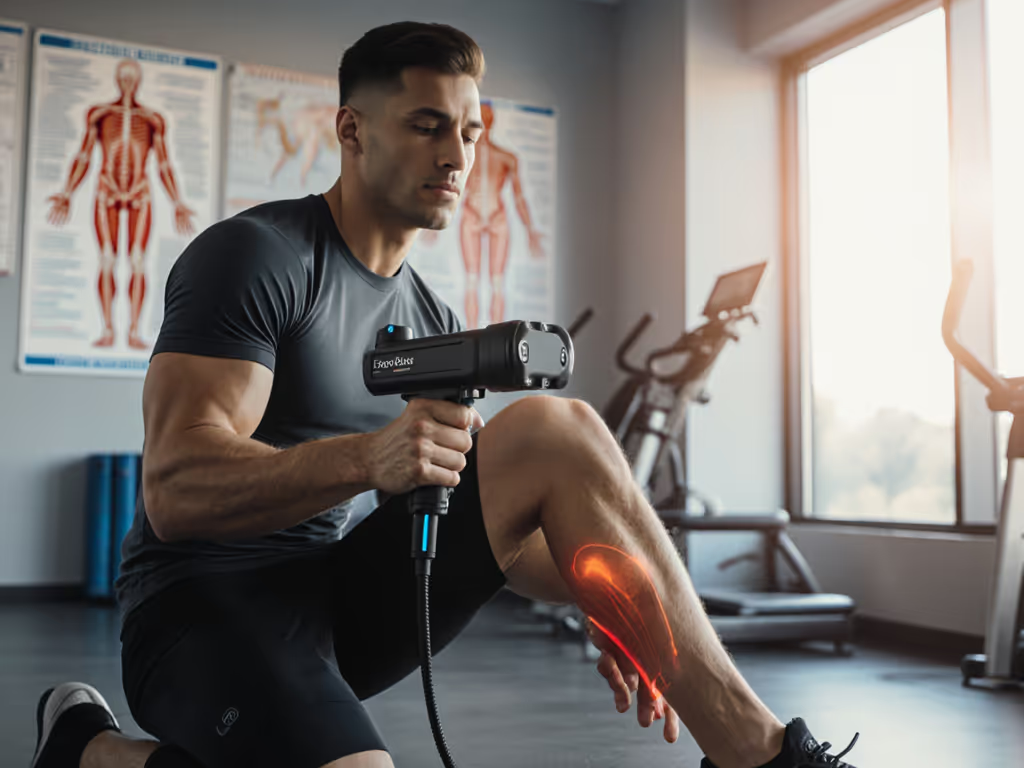
Full-Body Nighttime recovery protocols (Runners/Lifters):
- Calves (tight post-run): 90 seconds per leg, medium pressure
- Glutes (DOMS soreness): 90 seconds per side, medium to firm pressure
- Quads (if sore): 60 seconds per leg, light pressure
- Upper back: 60 seconds
- Finish: breathing reset, 30 seconds
The goal is tissue flush and tension release, not aggressive breakdown. Think of it as a 10-minute wind-down ritual, not a performance warm-up. To integrate breathing, stretching, or cold exposure without overstimulating before bed, follow our smart recovery sequencing guide. Keep it simple and repeatable.
Can I Use a Standard "Athletic" Massage Gun Before Sleep?
Technically, yes. Practically, no (if noise is a factor).
Athletic-focused massage guns prioritize deep stall force for recovery and are often louder during maximum-speed sessions. They're optimized for post-workout sessions in a gym, not for 10 p.m. in a shared bedroom.[1]
Recent product testing reveals a critical trade-off:[1][3]
- Devices marketed for "clinical-grade" recovery often operate above the 50 dB threshold at maximum speed
- Compact, sleep-focused designs maintain sub-50 dB operation but may sacrifice some amplitude
The practical insight: A slightly less powerful device that you'll actually use three nights a week is better than a flagship you abandoned after night three because it's too loud. Adherence is the metric that predicts real outcomes.
Does Intensity or Duration Matter More?
Intensity is overrated for sleep; consistency and protocol adherence are underrated.
A 7-minute session at moderate speed, twice a week, addressing tight zones, beats a 20-minute aggressive session once a month. Sleep onset improvement depends on habituation (your nervous system needs routine to trust that percussion means "relax," not "threat").
Misconception: "If I use it harder, it'll work faster."
Reality: Overuse triggers inflammation and defeats the parasympathetic calm you're after. For a deeper look at how percussion influences cortisol and relaxation, read our cortisol science explainer. Stick to medium amplitude, mid-range speeds, and 5-10 minute protocols. We've monitored long-term use patterns across diverse users. Those who scaled intensity too quickly abandoned devices within weeks.
Should I Be Worried About Overuse or Injury?
Valid concern. Overuse can aggravate inflammation, especially on bony areas (shins, elbows) or sensitive zones (IT band, plantar fascia).
Safe boundaries:
- Per muscle group: 90 seconds maximum per session
- Per week: 3-4 sessions, not daily
- Avoid: Direct percussion on bone, joints, or active injuries
- Test: Start at medium speed for one week; observe soreness patterns
- Red flags: Increased swelling, bruising, or soreness after sessions = reduce intensity or frequency
If you have active pain or injury, consult a physical therapist before using a massage gun. The device is an adjunct to recovery and relaxation, not a replacement for clinical care.
What Noise Level Is Truly "Silent" for Shared Spaces?
Here's the transparency: "Whisper-quiet" is subjective branding. Measured data is not.
Noise standards applied consistently across real-world conditions:[2][3]
- Under 50 dB = Safe for shared bedrooms (equivalent to calm conversation, light rain)
- 50-55 dB = Borderline; will wake some light sleepers
- 55+ dB = Noticeably loud; better suited for individual use or daytime
Our testing methodology (maximum speed, sustained pressure on dense tissue) reflects what actually happens when you use a device for its intended purpose. Devices claiming "ultra-quiet" but tested in ideal, light-contact conditions often disappoint in practice. When selecting a device for sleep, prioritize published noise specs at maximum speed on primary muscle groups. If a brand doesn't list this, assume it's louder than they're willing to disclose.
How Do I Know If a Massage Gun for Sleep Is Actually Worth the Investment?
The Honest Checklist:
- Does it measure up? Verify stall force (17+ lbs), amplitude (0.47+ in), and noise (sub-50 dB at max speed) from independent measurements, not product pages[3]
- Will you use it? Be ruthlessly honest: Is the weight, size, and ergonomic feel something you'll grab three times a week, or will it live in a drawer? Friction predicts abandonment.
- Can you access your problem areas solo? If your main tightness is mid-back or glutes, test reach and handle angle before committing
- What's the warranty and serviceability? Can you replace heads, batteries, or charging ports without replacing the whole device? Brands prioritizing spare parts bet on long-term use.
- Real-world noise testing: Borrow a device or visit a retailer demo. A quiet claim in a video isn't a quiet claim in your bedroom at 11 p.m.
Price-to-performance skepticism is warranted. A mid-range device with transparent specs and proven durability beats a premium model with vague claims every time. Tested the same way, every time, so the gap between marketing and reality becomes obvious.
Further Exploration
The foundation of sleep onset improvement with percussion therapy is discipline, not power. The devices that succeed in real homes aren't the flashiest; they're the ones that fit seamlessly into a nighttime recovery protocol, stay quiet enough to use without guilt, and sustain use for months, not weeks.
Before committing, document your current sleep and tension patterns for one week. Note which muscle groups tighten, when tension peaks (often late afternoon or before bed), and how pre-bed tension correlates with sleep onset speed. Then test a device (through a retailer trial or a friend's equipment) using the 5-10 minute protocols outlined above, for 2-3 weeks. Measure the change in tension and sleep onset, not the device's specs. For sleep-specific data and timing tips, see our pre-bed protocol analysis.
Real recovery isn't about the numbers on a spec sheet. It's about whether you'll use it week after week, and whether it genuinely shifts how you feel when your head hits the pillow. Your adherence over eight weeks tells the truth that marketing can never match.
Related Articles